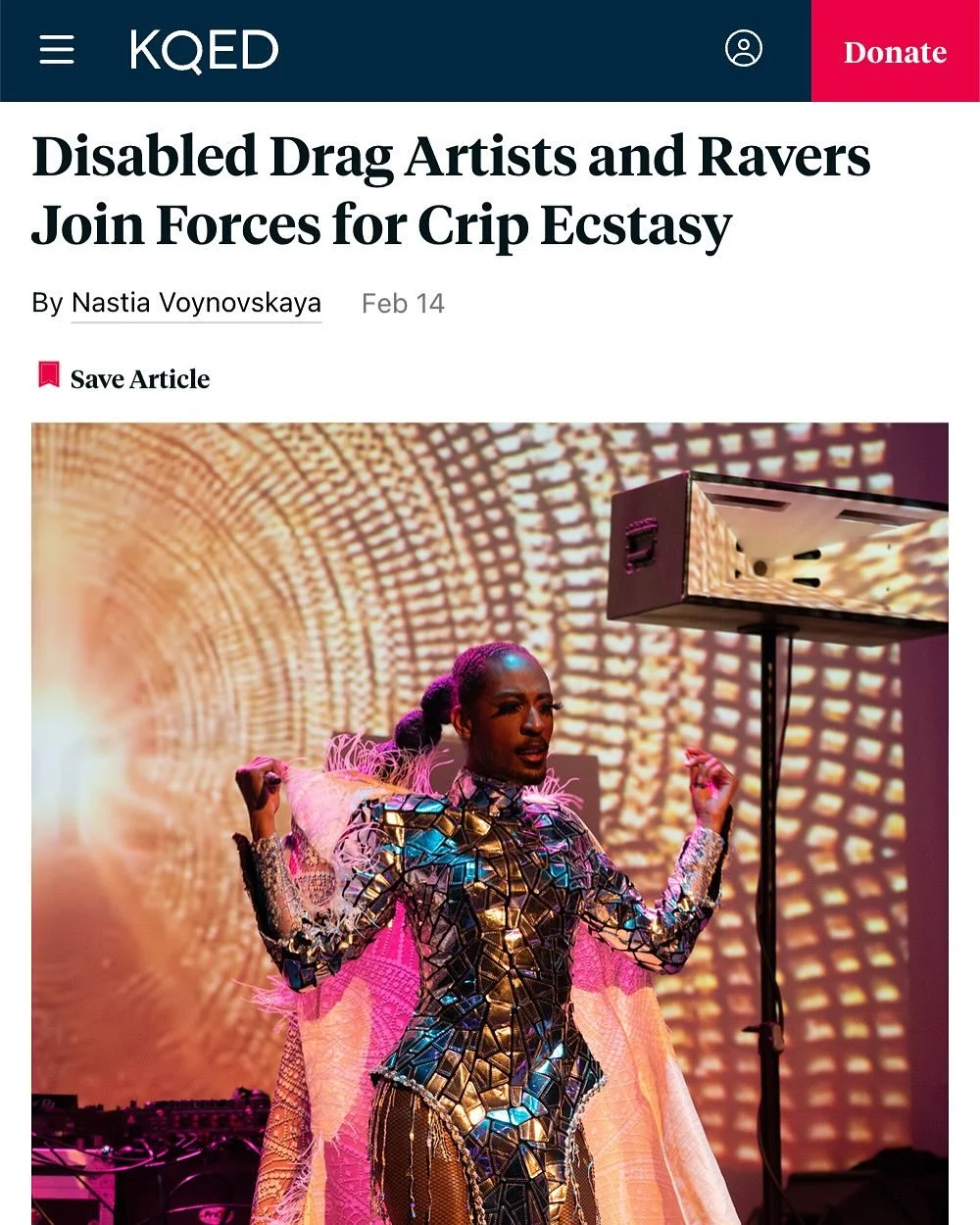
KQED Arts, Nastia Voynovskaya, Feb 2025
“At their warehouse party last Halloween, Octavia Rose Hingle finally felt free to get lost in the music. They reclined on a daybed on the dance floor, waving their arms as the DJ blended an intoxicating mix of house grooves and sexy lyrics from Charli XCX and Ice Spice. For Hingle, who deals with mobility issues, spaces that allow them to dance comfortably are exceedingly rare. That’s why they created Crip Ecstasy, a dance party and drag night that caters to attendees with different access needs.”
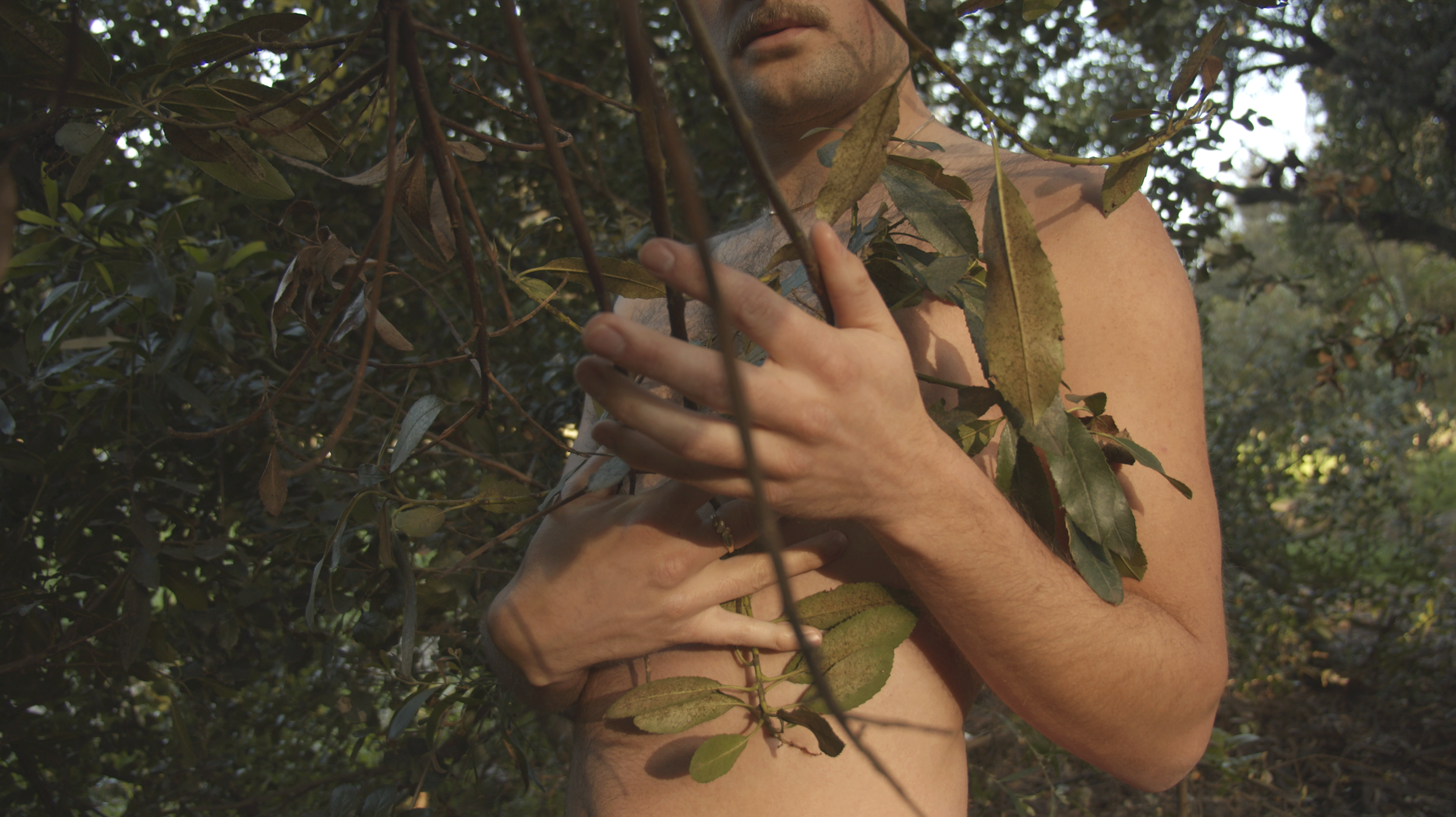
Jennifer Norris, March 2025
:under earth, a project of choreographer and performer Octavia Rose Hingle and composer Alexandrea Archuleta is a ritual of devotion inspired by the gardens and memoirs of queer English filmmaker and Gay rights activist Derek Jarman (1942-1994). The multi-talented Hingle gracefully casts spells with their sinuous arms while harmonizing perfectly with Archuleta’s lush futuristic soundscape… Archuleta’s transporting score and Hingle’s embodiment forms an engaging and loving tribute to an ancestor gone too soon.
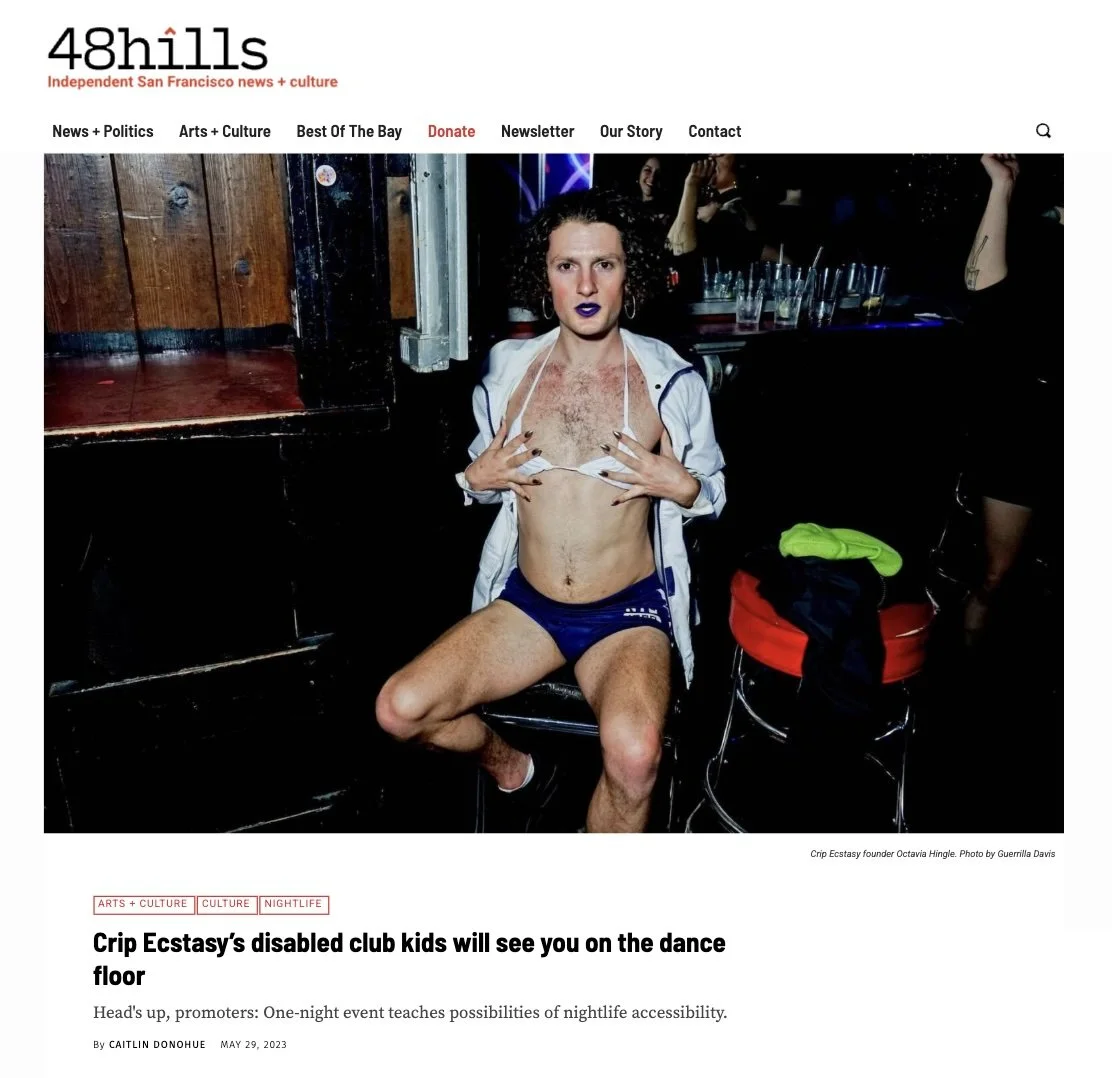
“Crip Ecstasy, founded by Octavia Hingle, will take over Counterpulse on Sat/3 for a joyful experience that centers the needs of disabled party animals. From a detailed flyer that clearly lists accessibility information to a stock of earplugs to “access doulas”… the event promises to be a good-ass time for all creatures of the night. And even though this Crip Ecstasy is a one-night affair, in an ideal world it will serve as a wake-up call to promoters who want to welcome disabled partiers to their soirees but don’t know where to start.
48 Hills SF, Caitline Donohue, May 2023
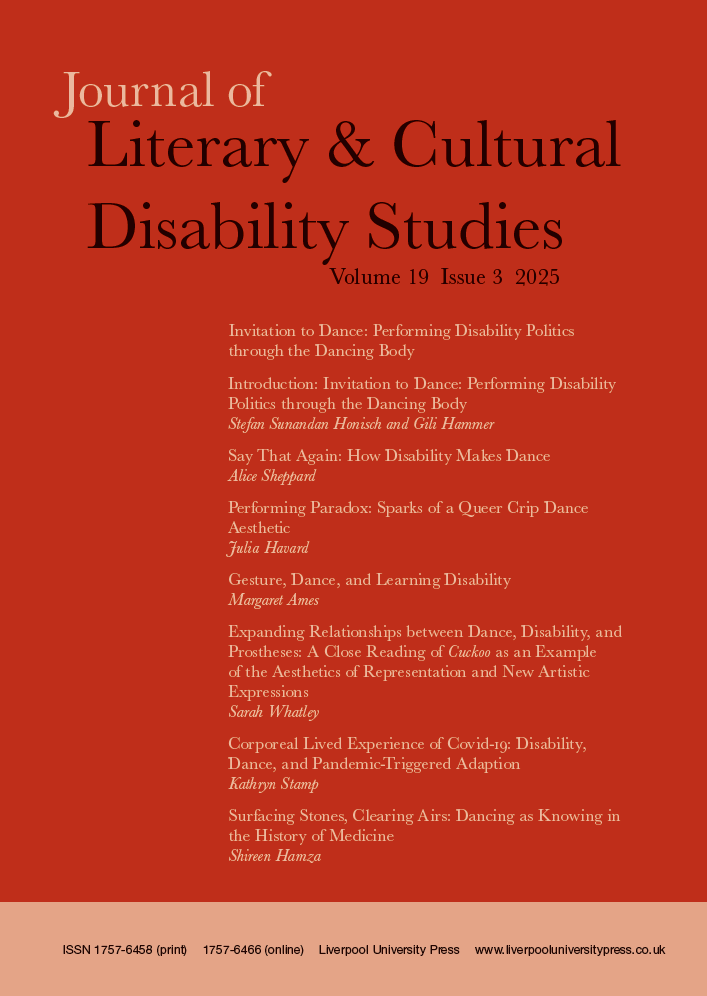
Liverpool University Press, Julia Havard, August 2025
“The article reflects on the presence of disability in dance cultures as a paradox and theorizes components of a queer crip dance aesthetic. Using examples from queer crip disability dance performance across multiple genres sourced from videos, digital media, and live performances, the discussion covers the aesthetic principles of multiplicity, leakage, desire, spasm, disruptive authenticity, and dreaming. With a focus on paradox, the article unpacks the contradictions that make disabled dance-making so rich, varied, and culturally vital, arguing that these aesthetic strategies are an important part of the political fight against ableism and toward the valuation of sick and disabled body-minds on a larger cultural scale.”
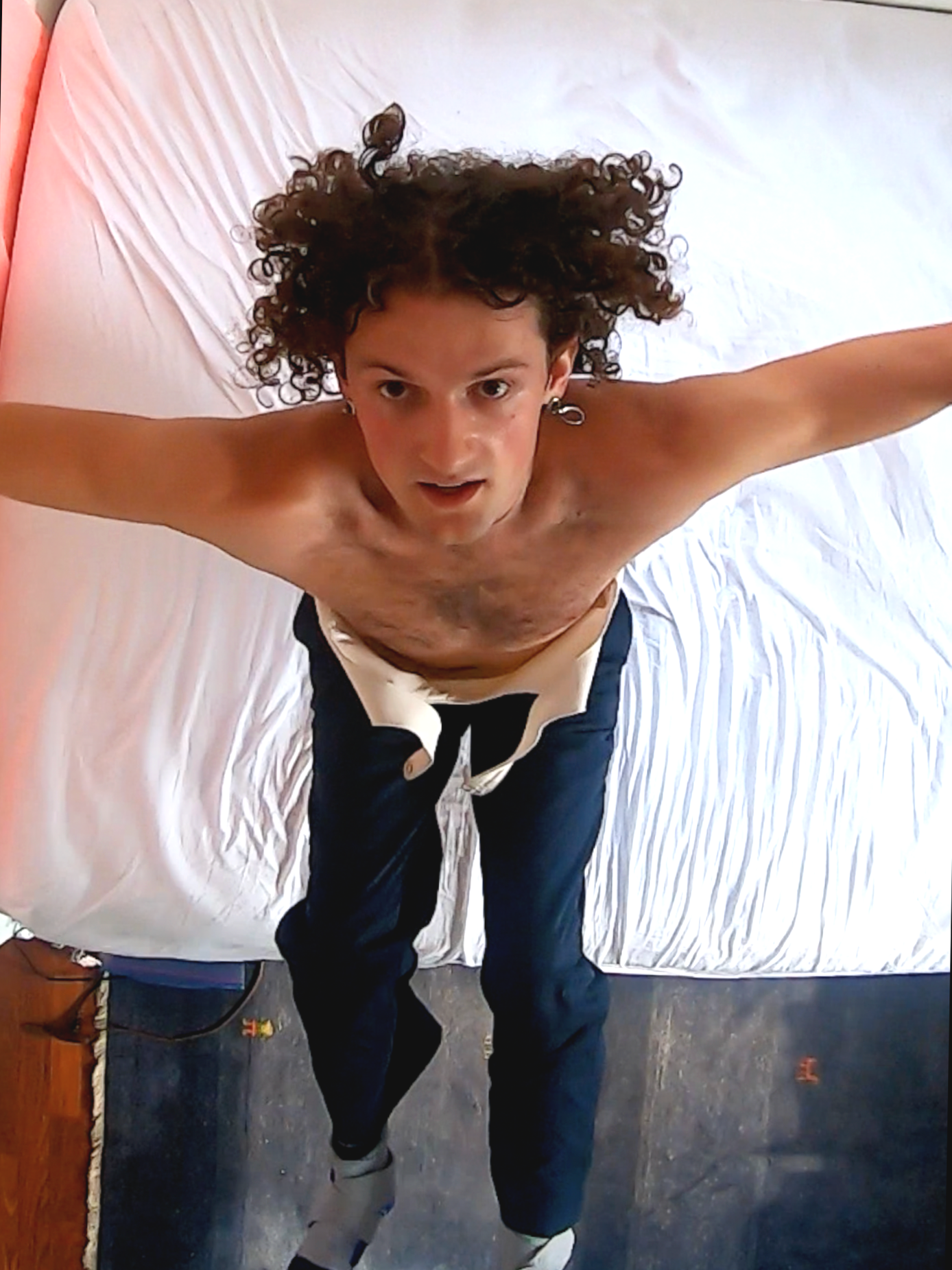
“bodyfabric is a stunning kaleidoscope of sound, gesture, body; a tumbling emergence of queer multiplicity depicting Octavia dancing in their bedroom.... This work is felt. The film's editing cinematically choreographs and layers their body as infinite motion, a multiplying self. No longer relevant are the aesthetics of public space and the value on verticality. Here, Octavia writes their own rules of gravity; the domestic space re-writes access to surfaces on which dancing might occur, contouring an expansive movement practice.”